

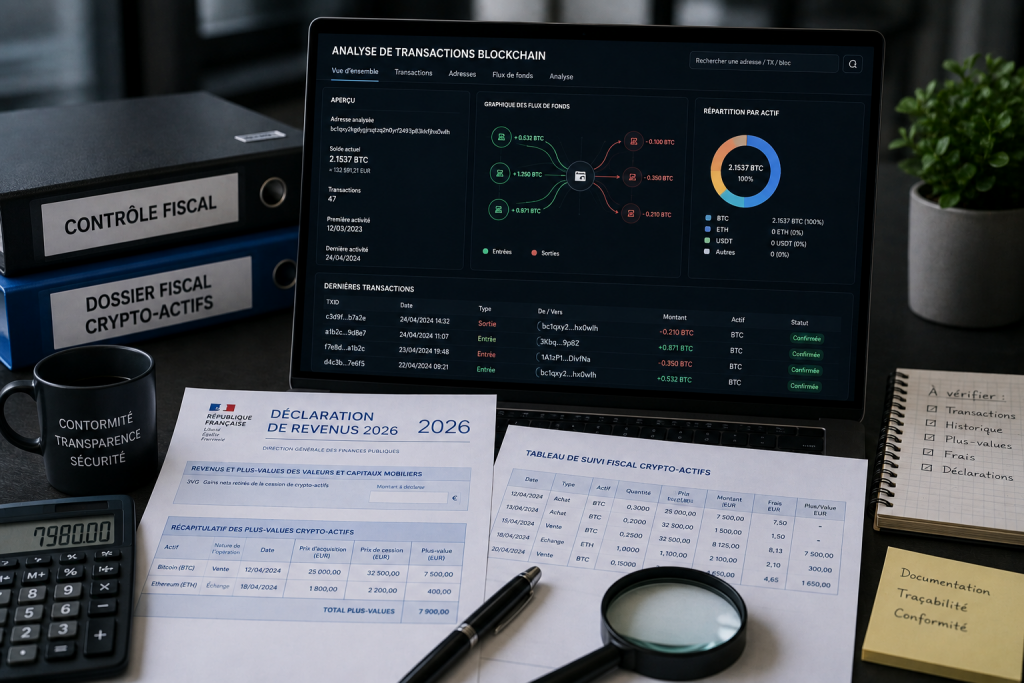
France's anti-fraud law of 25 June 2026 and the EU's DAC8 framework increase the importance of reliable crypto-asset records through different mechanisms. For a business or individual, the practical priority is an explainable history: account ownership, source of funds, transactions, valuations and returns already filed.
DAC8: collection starts before reporting
2026 is the first reporting year; the first transmissions covering that year take place in 2027. The European Commission places the first exchanges between tax administrations by 30 September 2027. Providers must also check national filing requirements. The earlier claim that automatic transmission of all transactions began in January 2026 was inaccurate. Official DAC8 timetable.
A platform may request tax residence self-certification, a tax identification number and supporting information. This does not replace the customer's own reporting obligations. A platform's statement will not necessarily cover every wallet, DeFi position or account used in earlier years.
The French law and crypto-assets
Article 90 addresses administrative attachment of assets held through a provider, including a sale mechanism subject to statutory conditions. Article 91 provides that, subject to business-income rules, gains on certain NFTs follow the regime of the underlying property or rights; the relevant provisions apply to disposals from 1 January 2026. Classification therefore requires examination of the token's rights. Official French law, Articles 90 and 91.
A token's name or use of blockchain technology does not determine its tax treatment. An attachment requires review of the notice, the custodian and the available remedies with a legal adviser. An NFT requires review of its contract and the rights actually transferred.
Build an auditable transaction file
- Identify the owner. Separate company accounts from the director's personal accounts and document beneficial ownership where relevant.
- Keep complete exports. Retain original platform files, public wallet addresses, transaction identifiers and bank statements.
- Classify each movement. A transfer between two wallets owned by the same person is not, by itself, new income. A customer payment, disposal, reward or capital contribution needs a separate analysis.
- Reconcile balances. Connect movements with remaining holdings and conversions into conventional currency.
- Document methods. Record price sources, exchange rates, fees and any limits on reconstructing the history.
A discrepancy between platform data and a tax return may result from an internal transfer, an incomplete export or a different classification. It needs an explanation and does not automatically prove fraud. Equally, downloading an export does not establish that a tax calculation is correct.
Returns, corrections and wealth transfers
Obligations depend on the taxpayer and activity. Reporting foreign accounts and reporting taxable gains are separate questions. Determine the applicable forms for the actual situation instead of applying an individual's rules to every company.
Where earlier returns may contain omissions, first reconstruct the facts and retrieve the filings already made. An accountant and, where needed, a tax lawyer can assess a correction. Voluntary disclosure does not automatically eliminate tax, interest or penalties.
For gifts and inheritance, prepare an inventory of rights, an appropriate valuation method for the relevant date and a secure access succession process. Transferring a private key alone does not resolve the legal or tax consequences.
Frequently asked questions
Does DAC8 create a new crypto tax?
It creates information reporting and exchange requirements. Tax liability still depends on the rules applicable to the transaction and taxpayer.
Is my platform statement sufficient?
It is one part of the evidence. Other accounts, transfers and consistency with supporting records and returns must be considered.
How can the firm organise the work?
An initial inventory identifies the periods, assets and available data. The engagement letter then defines the work and the limits of the assignment.